Xbox Console Store App
Building the console store app from the ground up
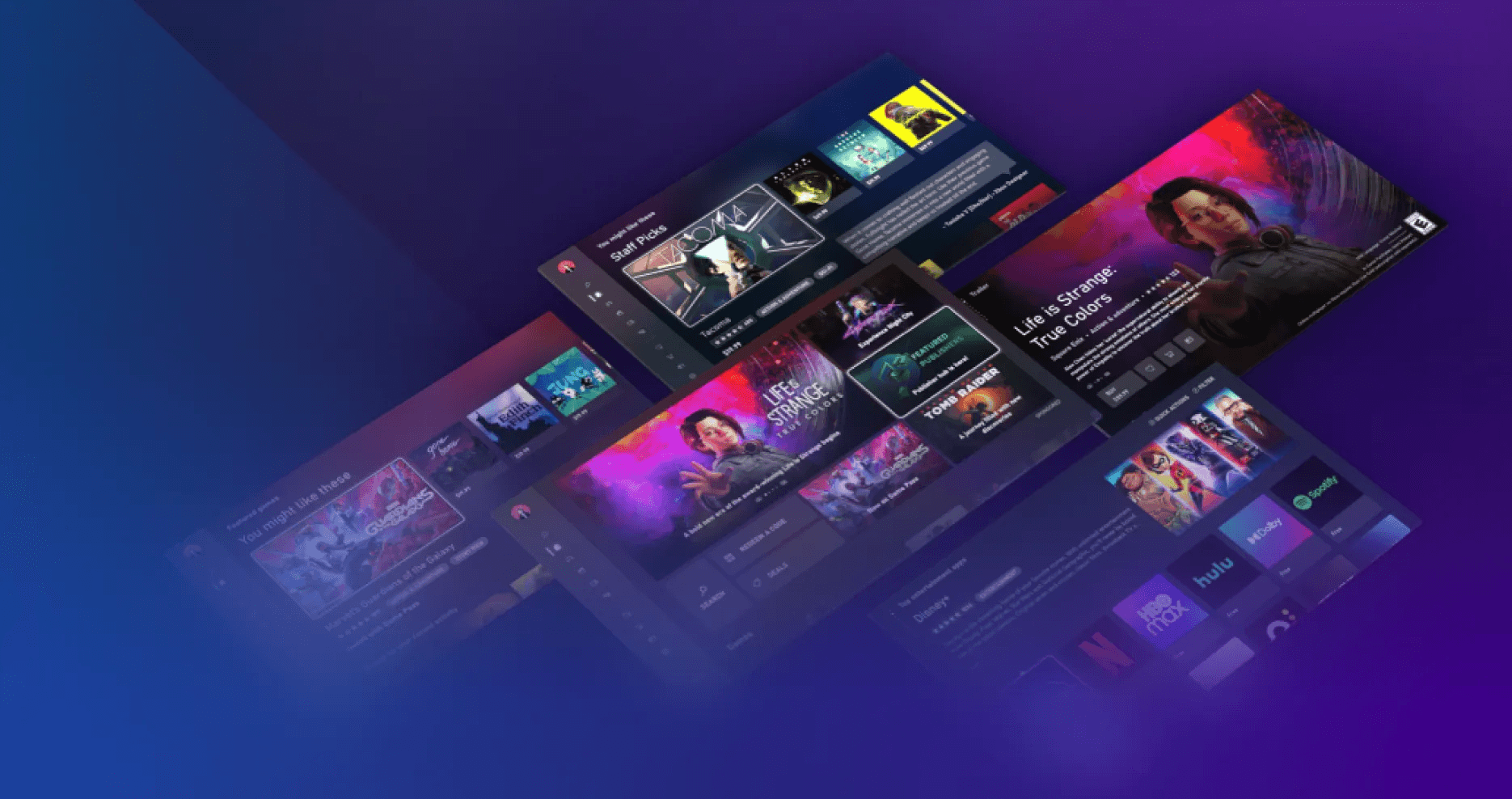
I had the opportunity to work with an exceptional engineering team to build the Xbox Store App from the ground up for the Xbox Series X | S and Xbox One. This app replacement was a significant success, generating substantial revenue and receiving widespread attention in the media. The project involved expertise across multiple disciplines, ensuring that the final product was both powerful and impactful.
My Role
In this project, I worked alongside a team of 4 designers, 1 User Research expert, 3 Product Managers, and 12 developers. My specific responsibilities included:
Detailed Analysis of the Legacy App: I conducted an in-depth review of the older console app, identifying areas for improvement by using the app extensively and analyzing research documents to understand user pain points.
Product Categorization: I laid out all the product categories, mapping out their complexities to create a clear and navigable structure for the new app.
Collaboration with Backend Engineers: I worked closely with backend engineers to understand the API calls, ensuring that the UX designs were optimized for faster load times and a smoother user experience.
Designing the Product Detail Page (PDP): I leveraged insights from product experts, backend engineers, front-end developers, and UR studies to design a robust and intuitive PDP.
Data Artifact Creation: I synthesized all the collected data into a Store - Order of Operations data artifact, which was eventually adopted and utilized by the entire design organization.
Design Process
Research and Analysis: The design process began with a comprehensive analysis of the legacy Xbox console app. I immersed myself in the app’s functionality, identifying key areas where user experience could be improved. This was complemented by a thorough review of research documents and user feedback, which provided valuable insights into user pain points and areas for enhancement.
Product Categorization and IA Development: I focused on organizing the product categories and mapping out the associated complexities. This step was crucial in developing a robust information architecture (IA) that would make the new app more intuitive and easier to navigate for users.
Backend Collaboration and UX Optimization: To ensure the new app was efficient and user-friendly, I collaborated with backend engineers to gain a deep understanding of the API calls. This collaboration was essential in optimizing the UX designs, particularly in reducing load times, which significantly improved the overall user experience.
PDP Design and Iteration: Designing the Product Detail Page (PDP) was a critical aspect of the project. I gathered insights from various stakeholders, including product experts, engineers, and the UR team, to create a PDP that was both functional and visually appealing. The design was iteratively refined through testing and experimentation to meet user needs effectively.
Data Artifact Creation: To ensure that the design insights and process were effectively communicated across the organization, I created a Store - Order of Operations data artifact. This artifact provided a structured overview of the design process and was instrumental in aligning the entire design organization on the project’s goals and outcomes.
Outcomes
Revenue and Media Impact: The new Xbox Store App was a resounding success, generating significant revenue and attracting positive attention in the media. It set a new standard for digital storefronts on gaming consoles, with users praising its enhanced performance and user-friendly design.
Improved User Experience: The optimized information architecture and UX design made the app easier to navigate, allowing users to find what they were looking for more efficiently. The faster load times and robust PDP design contributed to a smoother and more satisfying user experience.
Organizational Impact: The Store - Order of Operations data artifact became a valuable resource within the design organization, helping to standardize processes and improve collaboration across teams. It ensured that the insights gained during the project were effectively leveraged in future initiatives.